













Expert Views

Knee Replacement

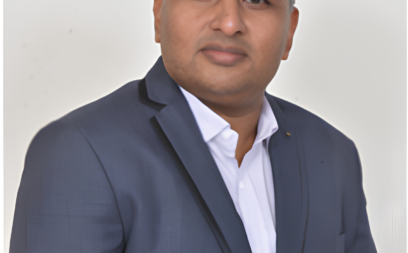
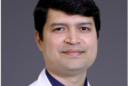
Dr. Ashwani Maichand

M.S. (Ortho) M.Ch (Ortho)

Nov-Dec 2010

Medgate today Magazine

With more andmore accessibilityto good medicalcare and everincreasingawareness about health and well being, the life expectancy is on the rise all over the world. Th is is a good signand a tribute to the dedication of ourmedical fraternity. People are now able to work actively in their sixties and seventies and many of these elderly members of society are participating in sports and leisure activities likegolf, tennis, trekking, swimming etc.

From a clinician’s point of view this has lead to a huge and rising volume of active and health conscious elderly population. More and more of these people are now visiting our OPD’s with geriatric conditions like cardiac problems, hypertension, diabetes, osteoarthritis etc. Out of all these, osteoarthritis is one disease for which there is a single step solution i.e. joint replacement. Once done the patient is free from all pain killers and visits to the orthopaedic surgeon.
Knee replacement surgery has been a taboo amongst our patient, people are ‘scared’ when the doctor mentions
surgery. Th e reasons for the repulsion are various : fi nancial, some bad experience, lack of family support, additional medical problems etc.

Let's take these one by one.

Financial:

In spite of India’ sphenomenal rise as an economy many people don’t have reach to basic health care facilities so knee replacement is just like a dream. Another reason isthat our elderly are most of the times dependent on their next generation for finances leading to so many ‘ifs’ and ‘buts’ that the dream becomes impossibility.

Bad Experience:

Knee replacement is a dream for many surgeons also because every young surgeon wants to be a knee replacement surgeon. This has given some of the worst results and a bad name to the surgery.

Lack of Family support:

Apart from finances these patients need some sort of physical assistance in their post operative period from the family members. In this age of nuclear families it may be difficult many a times for any of the younger members to devote that much time.

Medical Problems:

Most of these patients do have some medical ailments like cardiac, renal, respiratory insufficiency, diabetes etc. Such patients presume that such a major surgery (which is not a life saving surgery) is not worth taking the risk.

God helps those who help themselves

Many a times we meet patients who are not doing well after knee replacement. The reason why they chose a particular hospital for their surgery ; commonest answer is :’it’s close to our house.’ This is something that surprises us as surgeons. Knee replacement is a once in lifetime surgery, it should not be taken casually.
Choose your hospital and surgeon carefully. The centre should be fully equipped for all sorts of emergencies, should have good ICU and cardiac back up as we are dealing with elderly patients. One thing that is difficult to judge for a patient is : efficient and disciplined technical manpower. This comes automatically to a place where attention is given to every detail, it’s a culture which has to be ingrained by the institution in its every employee.
The surgeon should be trained for joint replacement surgery which means he must have worked at some good centre at least for few years. It’s an entirely different discipline from general orthopaedics which the surgeon subconsciously imbibes during his training. The initial training makes him aware of ‘something wrong somewhere’ but with time he raises the bar and starts looking for excellence. This doesn’t happen in weeks and months.

How I help my patients

Over the years as a joint replacement surgeon I have realized that my forty minutes with the patient in the operation theatre are going to decide his/her fate for the rest of their lives. But… more important than that is how much time I spend with my patient before and after the surgery.
I have seen patients getting operated but they are still unable to walk, reason: surgeon was too busy to do a detailed examination, patient was actually having a spine disorder!
Looks unbelievable… it happens when we as surgeons stop looking beyond knee joint.
We as a team make sure that the patient is examined at least three times before surgery i.e. in OPD, after admission and on table justbefore surgery. Detailed history is taken, every time by a different surgeon. Once the patient consents for surgery, the limb to be operated is marked, which is again checked by surgeon and confirmed by the scrub nurse and patient in the operation theatre.
The limb to be operated is cleaned & painted with antiseptic solution and wrapped in a sterile linen . It starts 24 hrs before surgery and is done twice a day. We have only one chance to give the patient a painfree and infectionfree knee and the credit goes to my junior colleagues and support staff for achieving the same.
We are doing our knee replacements by MIS technique. This means smaller scar, minimal tissue injury, less post operative discomfort and early mobilisation. This translates into benefit to the family i.e. shorter hospital stay reduces cost of treatment, less tissue trauma means no blood transfusion again reducing cost and complications . Early mobility means easier nursing care for the attendants and most importantly for this age group the overall physical and psychological well being dramatically improves once they become self dependent for their daily activities.
After the surgery we as a team of surgeons follow every little development the patient makes. These patients are not allowed many visitors for first five days to avoid any cross infection. Our persistent presence sort of fills that void also. We try to create the sense of belongingness with these patients by spending time with them and encouraging them to do better. Even after the discharge our team visits the patient frequently for physiotherapy, feedback and to look for any problem the patient or the family is facing.

Conclusion

Knee replacement is an excellent surgery which has given a new life to so many arthritic patients all over the world. The family and the surgical team (the family at hospital) need to put in extra efforts, need to be more vigilant to give the best results to these senior members of our family because they deserve it.


Min O Max

7A/75, W.e.A, Pusa Road,
Karol Bagh, New delhi-5
Contact Us: + 91 9811129607
Visit Us: www.minomaxortho.com